Donny Mate
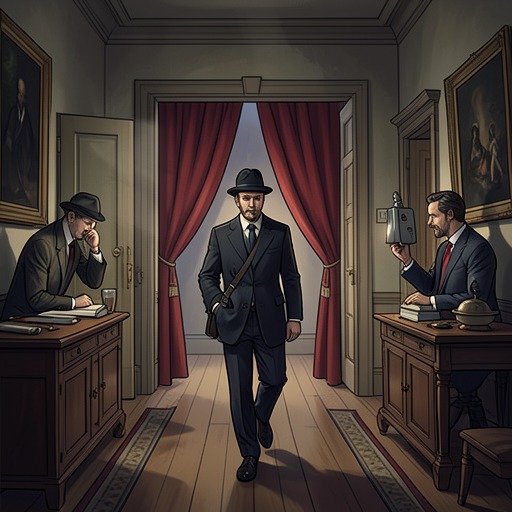
Dr. DeathDonny Mate, also known as Eldon Junior, is the estranged son of Eldon Mate and Guillerma Salcido Mate. His story reaches the investigation through the account of a mother who has not seen him for two years and a father who rejected him from infancy. That history turns the missing son into a possible suspect in Eldon Mate’s murder, but the case’s first portrait of Donny is assembled from other people’s recollections and speculation, not from a confirmed account of his actions.
Identity and Family Background
Donny was born after Eldon had made clear to Guillerma that he did not like children. She believed that having a child of his own might change his mind, but Eldon left soon after Donny was born. The separation was already twenty-five years and four months old when Guillerma recounted it, fixing the estrangement as a long-standing condition rather than a sudden consequence of the murder investigation. Donny’s name itself preserves the family connection and its division: he was called Eldon Junior, though his mother says he goes by Donny.
Eldon continued to send Guillerma five hundred dollars a month, but she stresses that this was not enough to count as her support; she had always worked. The payments arrived regularly by money order until the month of the interview, when the expected payment was five days late. Guillerma understood the money to come from an Army Reserve pension and was trying to find out whom to contact so it could be sent directly to her. This practical concern sits beside the emotional history: even in the aftermath of Eldon’s death, the unresolved arrangements left her pursuing the means to manage on her own.
Rejection and the Failed Reunion
After Eldon left, Guillerma and Donny lived in San Diego while Eldon was not far away, in Mexico. They spoke a few times in the beginning. Later, after Eldon became a doctor and went to Oakland to work at a hospital, Guillerma took Donny there. She describes the decision as foolish in retrospect, but explains that she had a boy who did not know his father and may have hoped the visit would change that.
Instead, the encounter made the rejection unmistakable. Eldon wore a white coat; the sight frightened Donny, who began screaming. Eldon became angry, yelled at Guillerma to take the child away, and would not speak to Donny, pick him up, or even look at him. The meeting did not repair the separation. In Guillerma’s memory, it marks the point at which the family possibility collapsed in front of the child himself. The contrast between Eldon’s professional role as a doctor and his refusal of his son is especially sharp: the white coat is the visible detail Donny fears, while the adult behind it refuses the most basic gestures of recognition.
Education, Disappearance, and His Mother’s Account
Guillerma remembers Donny as bright, scientifically minded, and a good student. He attended San Francisco State for a year, and she once imagined that he might become a doctor like Eldon. That expectation gives his later disappearance a particular weight: the future she pictured for him was not simply lost, but bound up with the profession of the father who had rejected him.
By the time Guillerma speaks with Alex Delaware and Milo Sturgis, she does not know where Donny is and has not seen him for two years. She says he changed completely, stopped taking care of himself, grew long hair and a beard, and became filthy in appearance, like a homeless person. Yet she distinguishes looking homeless from having no home: he still has one, she says, if he would return. Her account therefore leaves two facts in tension. Donny appears to have fallen into serious disarray, but his mother still regards her home as available to him. The distance between that offered refuge and his absence is not explained.
Suspect, Motive, and Narrative Role
Outside the house, Milo revises his earlier dismissal of the possibility that a street person might be involved in Eldon’s murder. He connects the mother’s description of Donny with the history of paternal abandonment and considers whether Donny might still want to be part of the family. Milo’s proposed motive is revenge or a return to claim a place in the family business: he imagines that Eldon’s growing fame could have aggravated old anger, and speculates that Eldon might have agreed to meet Donny on Mulholland rather than bring him to his apartment. He also suggests that Eldon may have backed the van because he feared for his safety. These are investigative hypotheses, not established events; the account does not confirm that Donny met his father there or took part in the murder.
The records search that follows gives the suspicion a concrete lead without resolving it. A felony search for Eldon S. Mate produces no result, but a search for Eldon Salcido returns three California convictions with matching vital statistics. The name connects the case’s search for a possible suspect to the family’s history, while the distinction between the names underscores how much of Donny’s adult life remains outside his mother’s knowledge. At this stage, he is at once a remembered child, a missing adult, and a possible source of violence. The novel’s portrait depends on that uncertainty: a painful history supplies a plausible motive, but neither the mother’s account nor Milo’s conjecture proves what Donny did.